

Stop-and-go driving
Every stop uses a little pad. City traffic, school runs and short trips with lots of stops wear pads much faster than steady highway miles.
Home » Brake answers »
Brake answers
The short answer
There's no single number. How long brake pads last depends on how and where you drive, your vehicle and the pads themselves: stop-and-go traffic, hills, heavy loads and hard braking wear them fastest. New pads start around 12 mm thick, and the conversation about replacing them starts near 3 mm. Have them checked every 6 months or 6,000 miles.
From the Budget Brakes shops · Updated
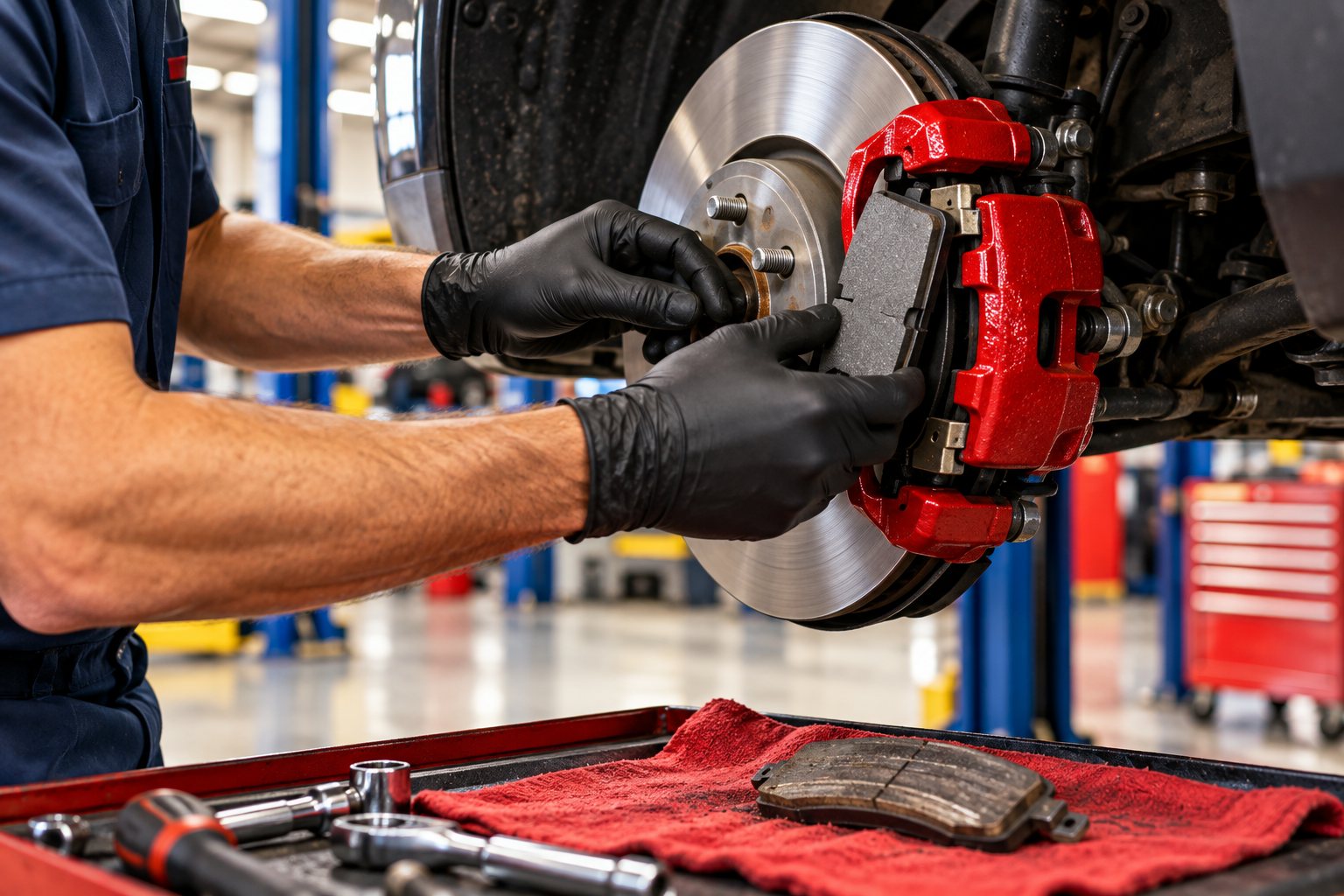
Every stop uses a little pad. City traffic, school runs and short trips with lots of stops wear pads much faster than steady highway miles.
Trucks, SUVs, towing and a full load take more braking to stop, so their pads work harder.
Long downhill runs and late, hard stops build heat, and heat wears pads and rotors faster.
When a caliper or its slide pins stick, a pad can drag on the rotor all the time and wear out early, often on one side only.
Pads are made from different materials, and some wear faster than others. The front pads usually wear out first because the front brakes do most of the stopping.
A high squeal when you brake, from the pad's metal wear tab. Why brakes squeak.
Grinding, which usually means the pads are already worn through. Grinding when you brake.
A pad wear light on the dash, on cars that have one, or a car that takes longer to stop than it used to. The brake light.
Have the brakes inspected every 6 months or 6,000 miles, and any time you hear a new noise or the car stops differently. At Budget Brakes the six-point brake inspection is free: we measure the pads in millimetres and show you, and check the rotors, the brake fluid and the hardware. Book online.
When it's time, lifetime warranty brakes start from $100, you get a written price before any work starts, and most brake jobs are done the same day. What a brake job costs.
Look ahead and ease off the gas early instead of braking late, keep a gap in traffic, and don't carry weight you don't need. Have a sticking caliper or worn hardware fixed when it's found, so one pad doesn't wear out early. How to make your brakes last longer.
Measured, not guessed. New pads start around 12 mm. We start the conversation near 3 mm, and you see the number.

Sixteen shops. One way of doing things.
Quality parts at low prices, an honest look at what your car needs, and a guarantee that travels with you to any Budget Brakes.
