Pads worn to the metal
The most common cause. New pads start around 12 mm thick. When the friction material is gone, the steel backing plate grinds on the rotor.

Home » Brake answers »
Brake answers
The short answer
Grinding when you brake usually means the brake pads are worn through and metal is rubbing on the rotor. Don't put it off: every stop now cuts into the rotor, which turns a pad job into a pad-and-rotor job, and the car won't stop as well as it should. Light rust after the car has sat, or a stone caught behind the rotor, can grind too.
From the Budget Brakes shops · Updated
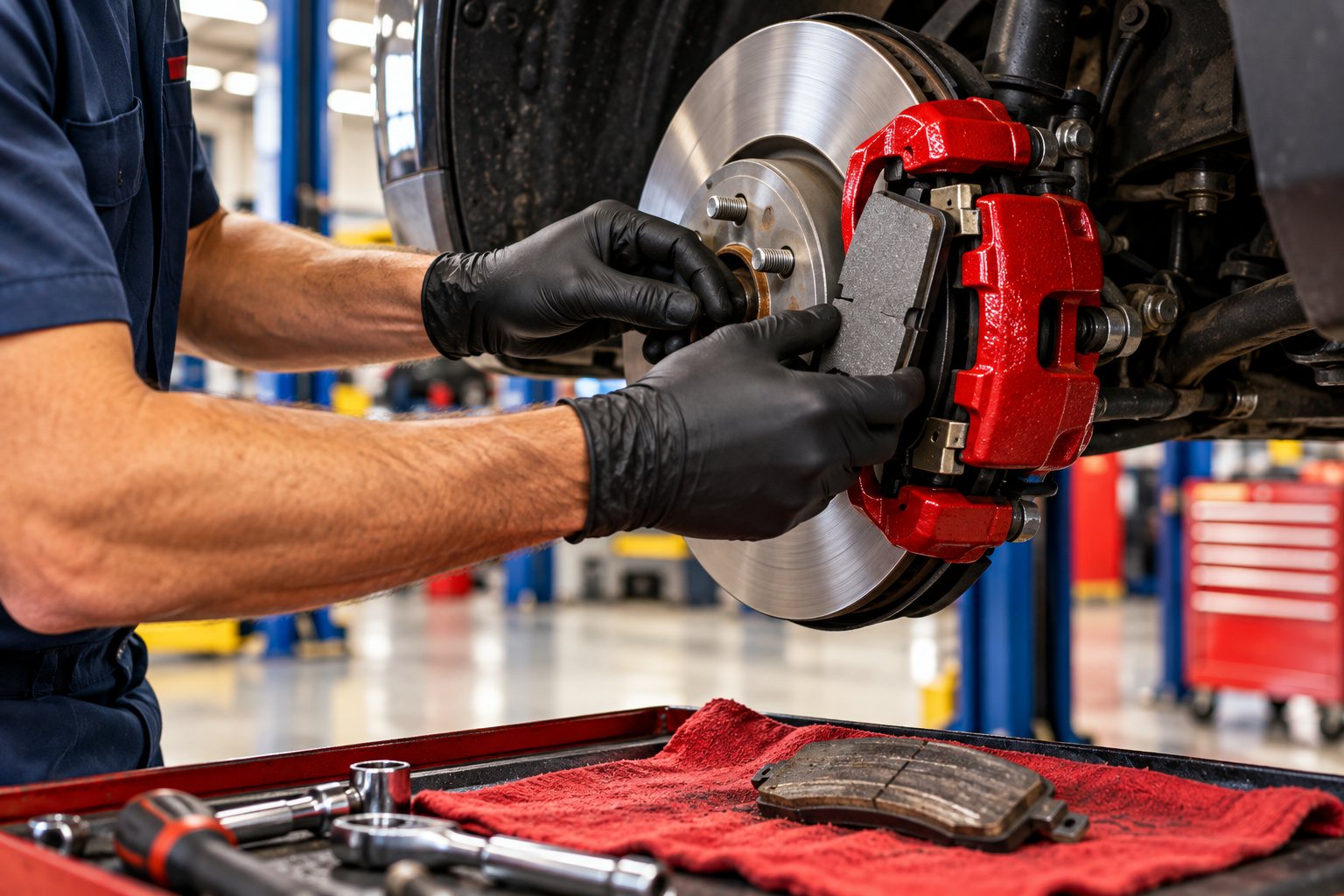
The most common cause. New pads start around 12 mm thick. When the friction material is gone, the steel backing plate grinds on the rotor.
Rain, humidity or a few days parked leave a thin layer of rust on the rotors. A light grind for the first few stops that then goes away is normal.
A small stone stuck between the rotor and its dust shield scrapes all the time, even when you're not braking. It's quick to clear, but left there it can score the rotor.
In a hard stop on a wet or icy road, the anti-lock brakes pulse fast and can sound like grinding. That's normal.
Loose pad clips can rattle and grind. A worn wheel bearing growls or hums, gets louder with speed, and makes its noise without the pedal.
Many brake pads have a small metal tab that squeals when the pads get thin. That squeal is the early warning, and it's the cheapest time to come in. Grinding is what comes after it.
Not for long. Steady grinding when you brake usually means the pads are gone, and the car won't stop as well as it should. Drive gently, leave extra room, and go only as far as a shop.
If the pedal feels soft or sinks, or the red brake warning light comes on, don't drive it. Have it towed.
Caught early, it may still be just pads. The longer it goes, the more likely the rotors need replacing too, and sometimes the calipers. At Budget Brakes, lifetime warranty brakes start from $100, and the free inspection tells you exactly what your car needs, in writing, before any work starts. What a brake job costs.
Measured, not guessed. New pads start around 12 mm. We start the conversation near 3 mm, and you see the number.

Sixteen shops. One way of doing things.
Quality parts at low prices, an honest look at what your car needs, and a guarantee that travels with you to any Budget Brakes.
