
The wear tab
Many pads have a small metal tab that touches the rotor when the pad gets thin. It makes a high, steady squeal on purpose. That's the early warning.
Home » Brake answers »
Brake answers
The short answer
Brakes most often squeak because the pads are getting thin: a small metal tab on the pad touches the rotor and squeals to warn you. Morning moisture, brake dust, glazed pads or dry hardware can squeak too, and some of those are harmless. A squeal that comes back on every drive means it's time to have the pads measured, before it turns into grinding.
From the Budget Brakes shops · Updated
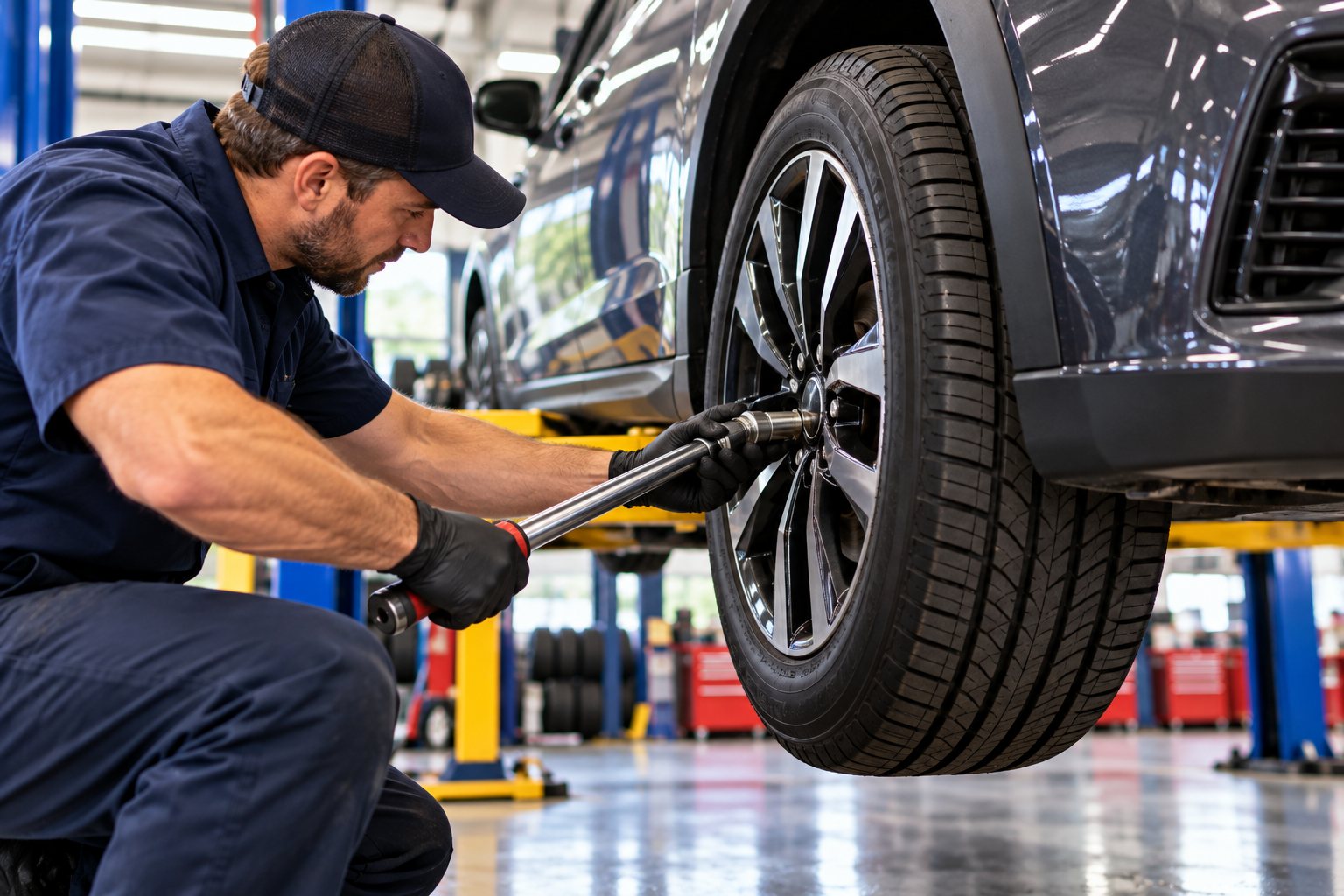
Many pads have a small metal tab that touches the rotor when the pad gets thin. It makes a high, steady squeal on purpose. That's the early warning.
Rain, dew or a night parked outside leaves a thin film of rust on the rotors. A squeak on the first few stops that then goes away is normal.
Brake dust, sand or a small stone between the pad and the rotor can squeak or scrape. It often clears by itself. If it doesn't, have it looked at before it marks the rotor.
Hard, repeated braking can overheat the pads until the surface turns hard and shiny. Glazed pads squeal and don't grip as well as they should.
Pads sit in metal clips and the caliper slides on pins. When those are dry, rusty or missing, the pad vibrates against the rotor, and that vibration is the squeal.
New pads can make some noise for the first few miles while they wear in against the rotor. It should fade. If it doesn't, go back to the shop that fitted them.
A squeak on the first few stops of the day, or after rain, that then goes away is almost always moisture. A high squeal that comes back on every drive is usually the wear tab, and on some cars you hear it while rolling, before you touch the pedal.
A low, rough grinding is different. That usually means the pads are already worn through. Grinding when you brake.
A squeak alone, with the car stopping normally, usually lets you keep driving for now. Don't leave it for weeks: if it's the wear tab, the pads are near the end, and grinding comes next.
If the squeak turns into grinding, the car pulls to one side or the stops feel weaker, get it checked before you drive any farther. If the pedal feels soft or sinks, or the red brake warning light comes on, don't drive it. Have it towed.
It depends on the cause. Thin pads are replaced. Dry or worn hardware is cleaned, lubricated or replaced. Glazed or uneven rotors are resurfaced or replaced. New rotors or just pads?
At Budget Brakes it starts with the free six-point brake inspection: we measure the pads in millimetres and show you, and check the rotors, the brake fluid and the hardware. Lifetime warranty brakes start from $100, and you get a written price before any work starts. What a brake job costs.
Measured, not guessed. New pads start around 12 mm. We start the conversation near 3 mm, and you see the number.

Sixteen shops. One way of doing things.
Quality parts at low prices, an honest look at what your car needs, and a guarantee that travels with you to any Budget Brakes.
