
Uneven rotors
The most common cause. Most people call it warped rotors. Usually the rotor has worn thicker in some spots than others, or pad material has built up in patches, so the pads grab and release as it turns.

Home » Brake answers »
Brake answers
The short answer
A steering wheel that shakes only when you brake usually points to the front brake rotors. Their surface has worn unevenly, so the pads grab and let go as the wheel turns, and you feel it in the wheel. Worn steering or suspension parts, a sticking caliper or unevenly tightened wheels can cause it too. Get it checked soon: it tends to get worse.
From the Budget Brakes shops · Updated
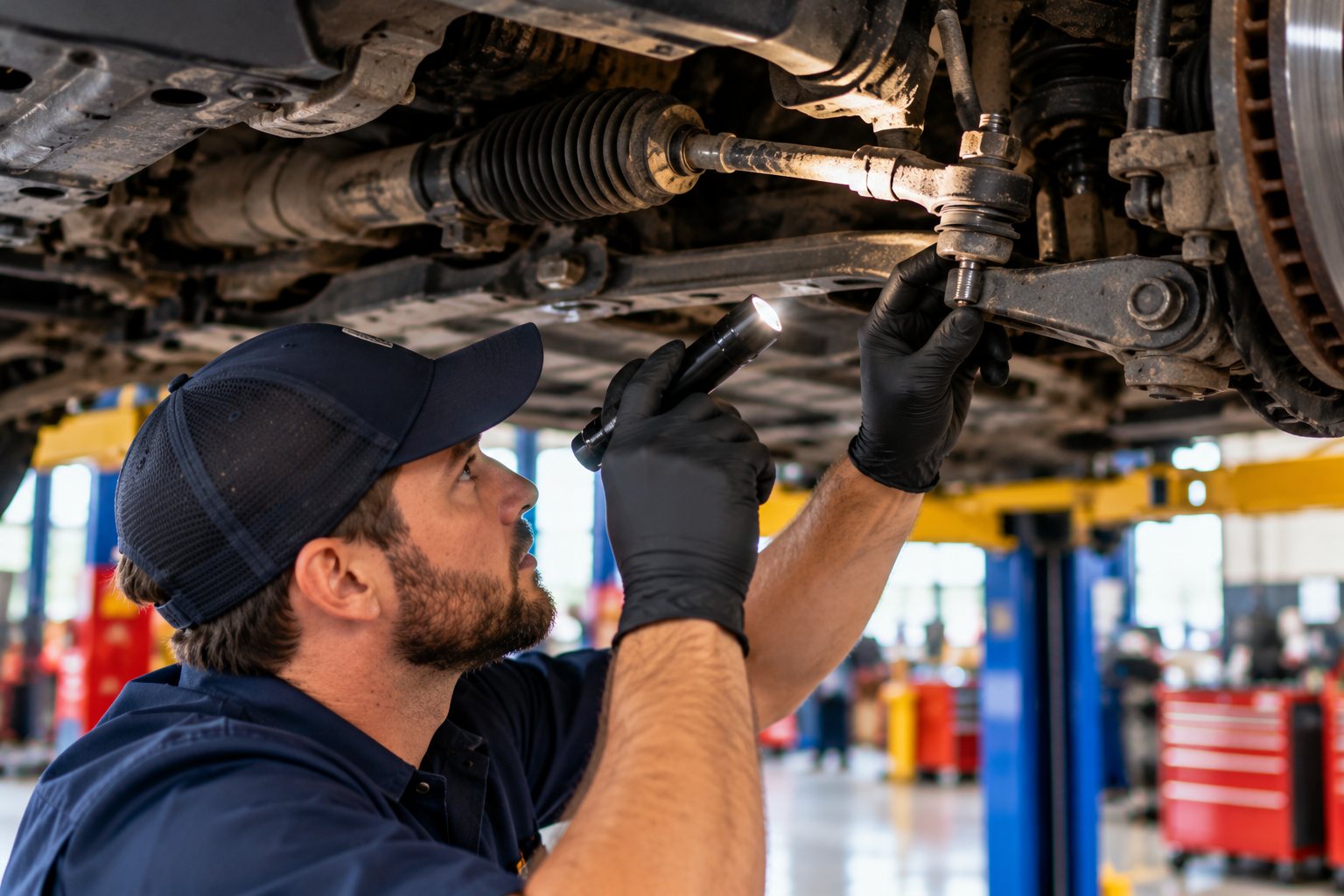
The most common cause. Most people call it warped rotors. Usually the rotor has worn thicker in some spots than others, or pad material has built up in patches, so the pads grab and release as it turns.
Loose tie rod ends, ball joints or control arm bushings turn a small brake vibration into a real shake. They also wear your tires unevenly.
A caliper that doesn't fully release keeps a pad dragging on the rotor, overheating it and wearing it unevenly. The car may pull to one side, or one wheel may smell hot after a drive.
Lug nuts tightened unevenly, or rust between the wheel and the hub, can make a rotor wobble. Lug nuts should be tightened to specification with a torque wrench.
Shaking in the steering wheel usually comes from the front brakes. A pulse you feel mostly in the pedal or the seat often points to the rear. If the wheel shakes at highway speed whether you brake or not, look at tire balance and alignment first: that isn't a brake problem.
A mild shudder usually means you can drive to a shop, but don't put it off. The vibration tends to grow, uneven rotors wear new pads faster, and a sticking caliper can overheat.
If the shaking comes with grinding, a hard pull to one side, a soft pedal or a brake warning light, get it checked before you drive any farther.
It depends on the cause. Uneven rotors are resurfaced or replaced, with new pads so they wear in on a true surface. Worn steering or suspension parts are replaced, and the alignment is checked afterward because those parts change it.
At Budget Brakes it starts with the free brake inspection: we measure the pads and check the rotors, the fluid and the hardware, then give you a written price before any work starts.
Measured, not guessed. New pads start around 12 mm. We start the conversation near 3 mm, and you see the number.

Sixteen shops. One way of doing things.
Quality parts at low prices, an honest look at what your car needs, and a guarantee that travels with you to any Budget Brakes.
